

By somayeh
Published July 19, 2026
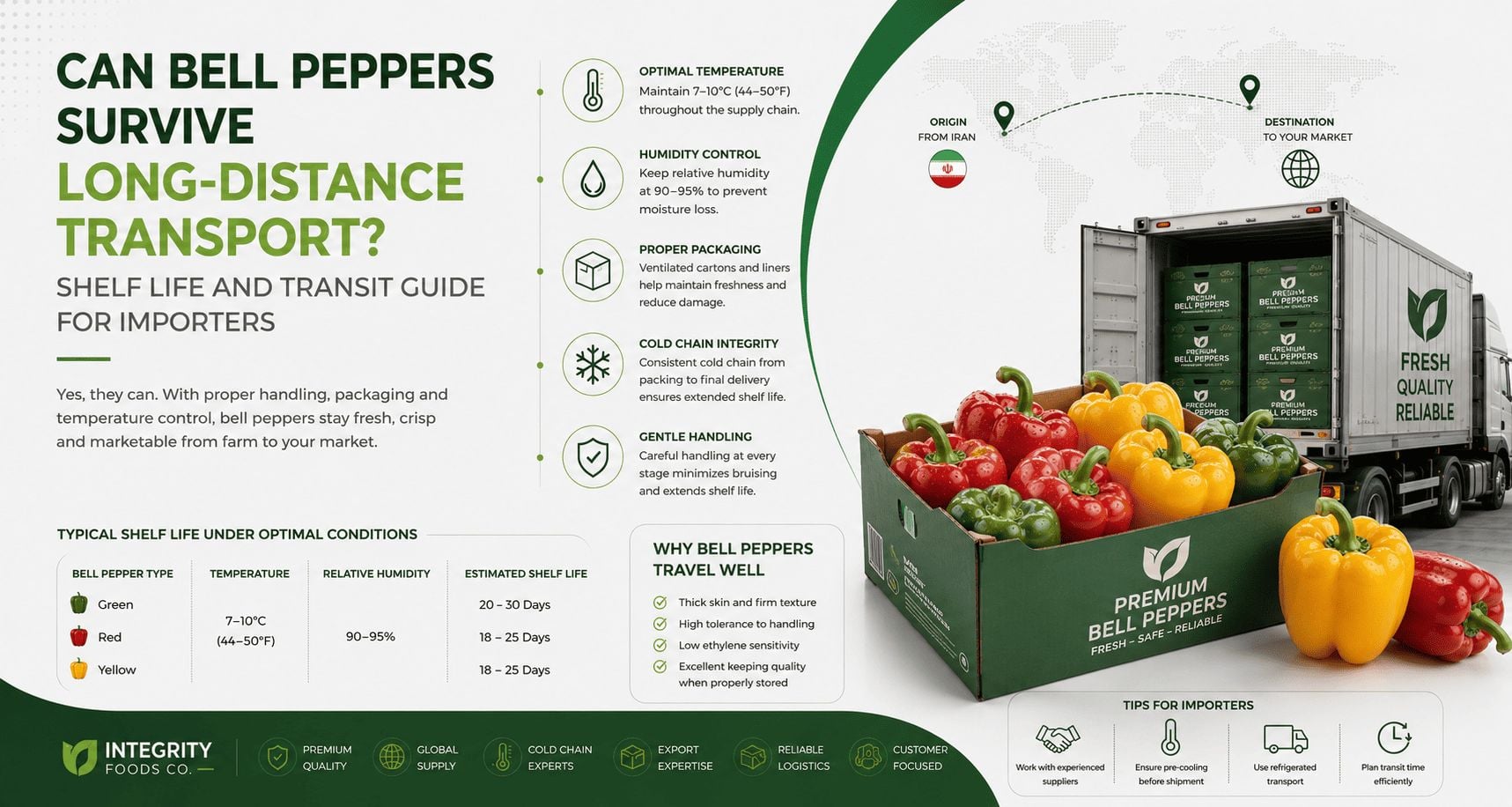
Shelf life is not just about freshness; It directly affects customer satisfaction, minimizes waste, and determines whether a shipment can be sold at its full value when it arrives. So If bell peppers lose their quality during long-distance transport, it translates into significant financial losses for importers and manufactures. Is there any solution? Can bell peppers survive long-distance transport without losing their premium quality?
In this article, we will talk about this.
Can Bell Peppers Survive Long-Distance Transport?
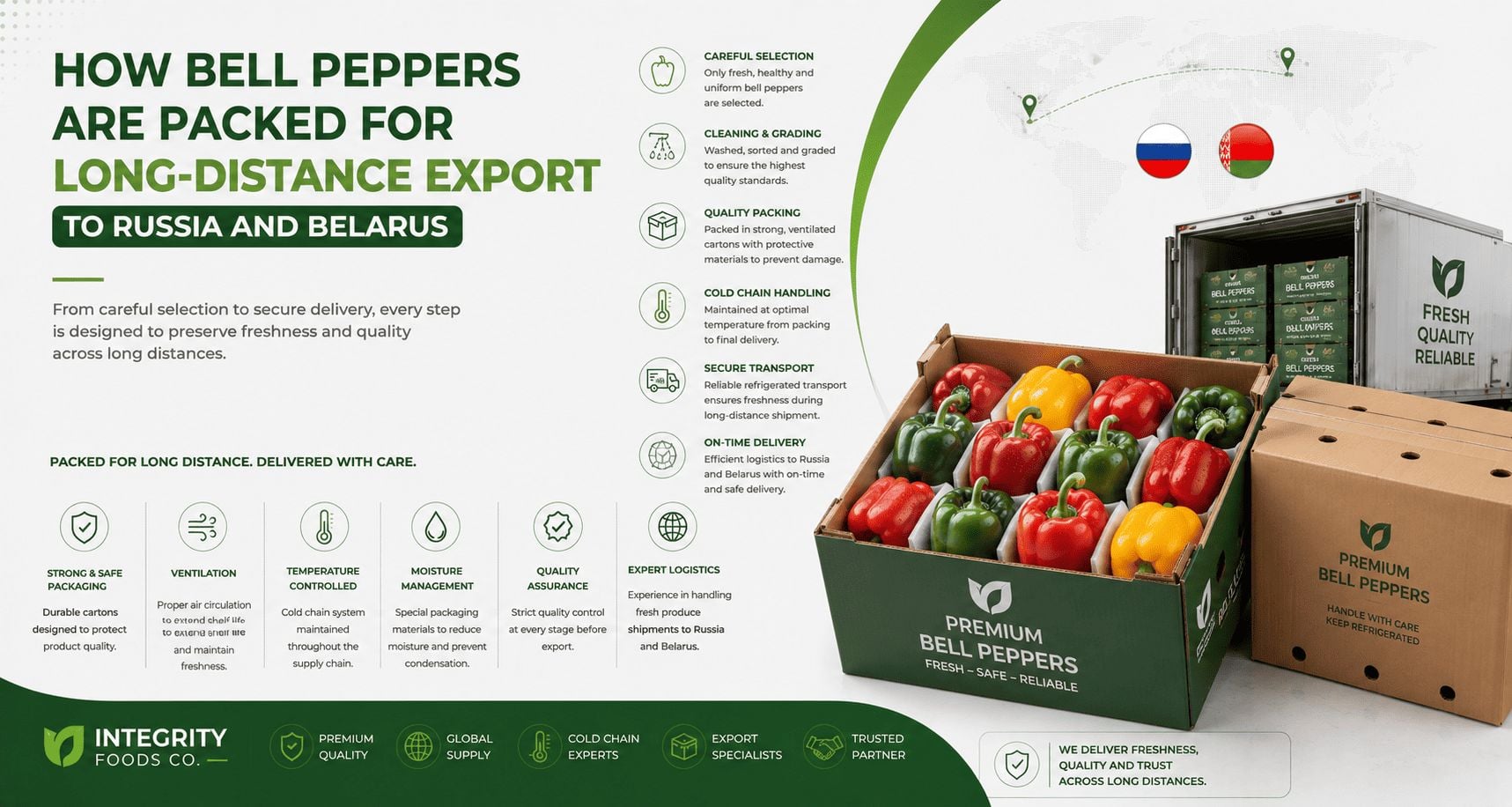
The answer is a definitive yes. However, achieving this requires that every link in the supply chain is managed with precision. Under optimized conditions, specifically regarding harvesting, packaging, and climate control, fresh bell peppers can maintain high-quality standards for approximately 12 to 14 days during transit.
Key Factors In Maintaining Bell Pepper Shelf Life During Transport
Maintaining fresh bell pepper transit time quality requires a deep understanding of several interconnected variables. If any link in this chain fails, the risk of spoilage increases.
Harvest Stage
One of the most common mistakes in the export industry is harvesting peppers at the wrong maturity level. For long-distance shipping, bell peppers should not be fully ripe at the time of picking. Instead, they should be harvested at a stage where they are approximately 3/4 colored.
This timing is essential because the final ripening process continues during transit. By selecting the correct maturity stage, the fruit retains its structural integrity for longer. In contrast, if peppers are harvested overripe, they quickly lose their firmness, leading to significant bell pepper damage during shipping.
A professional fresh bell pepper supplier prioritizes this stage to ensure the product arrives crisp and firm.
Packaging System
If cartons are stacked too high or loaded incorrectly, the mechanical pressure can crush the layers below. This is a common cause of bell pepper damage during shipping.
Furthermore, the arrangement of these cartons must be strategic; a poor layout can block essential airflow, creating hotspots that accelerate decay.
Ventilation
Airflow is the lifeline of fresh produce during transit. Without proper ventilation, heat and moisture build up inside the carton. Poor airflow can speed up decay and reduce firmness. Good wholesale bell pepper transport quality depends on packaging that allows the peppers to breathe.
Temperature Control
Temperature has a direct influence on pepper firmness, respiration rate, and overall shelf life. If the container temperature becomes unstable or too warm, the peppers will soften rapidly, losing their freshness and value. So the temperature effect on bell peppers must be controlled from packing to delivery.
Conclusion
Ultimately, the safe arrival of bell peppers depends on a correct harvest stage, proper packaging, good ventilation, temperature control, and careful stacking. When these factors are managed with expertise, bell peppers can travel long distances while remaining fresh, firm, and highly attractive to the market.
If you are looking for a reliable Iranian bell pepper supplier with export-ready packing and logistics support, Integrity Fruit is your strategic partner. We connect international importers with trusted Iranian producers, managing everything from expert packaging to complex global logistics to ensure your shipment arrives in perfect condition.